

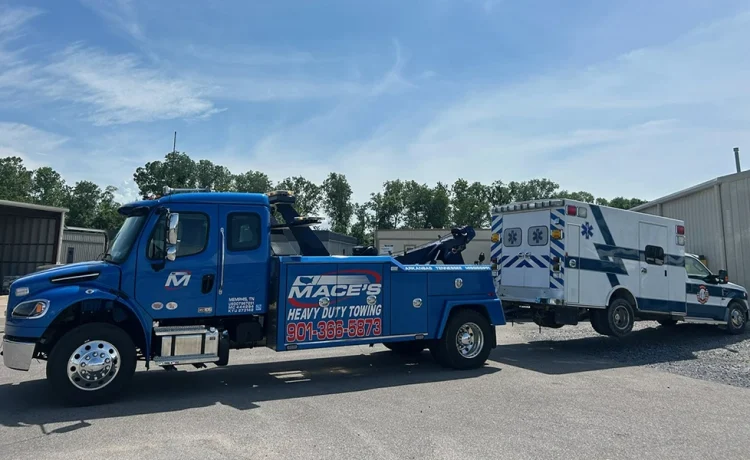
Large vehicle breakdowns rarely happen at convenient times. The variables surrounding each incident combine differently every time, and those combinations are what drive cost variation across heavy vehicle towing jobs. Getting familiar with the factors that influence pricing helps fleet managers, owner-operators, and commercial vehicle owners make informed decisions when situations arise, rather than working through the billing afterwards without context for what drove each line item.
Vehicle weight and configuration
heavy duty towing pricing often reflects total vehicle weight along with load balance during recovery setup. A loaded semi-trailer presents a fundamentally different recovery challenge than an empty box truck, even when both vehicles technically fall into the heavy-duty category. Gross vehicle weight, axle configuration, and whether the load remains attached during the tow all factor into how the job gets classified and priced by the service provider.
Speciality vehicles with unusual dimensions, low clearance, or non-standard axle arrangements require equipment configurations that standard heavy recovery setups don’t handle. Oversized agricultural equipment, construction machinery, and custom commercial vehicles each bring specific rigging and transport requirements that add complexity beyond what the weight figure alone communicates.
Distance and route factors
Base rate structures for heavy towing typically establish a hook-up component covering the initial response and connection work, followed by a mileage-based component covering the transport distance to the destination. Longer hauls between the breakdown location and the nearest appropriate repair facility significantly increase the mileage component in remote highway incidents compared to urban breakdowns, where facilities sit closer together.
Route characteristics also influence what the job requires from equipment and crew:
- Highway versus urban recovery affecting traffic management requirements during the operation
- Road grade and elevation changes on mountain or hill routes require additional equipment capacity
- Bridge weight restrictions on certain routes require longer alternative paths to reach the destination
- Narrow rural roads limit which equipment can access the breakdown location directly
- Return trip distance for the towing unit after delivery affects fuel and crew time calculations
Time and availability
Recovery jobs that happen during standard business hours on regular weekdays pull from a service provider’s normal operational capacity. Night hours, weekends, and public holidays represent periods when staffing those responses carries higher operational costs for the provider. Those elevated costs get reflected in the rates applied to after-hours responses, which is a consistent feature across heavy towing markets rather than a practice specific to individual operators.
Response time requirements also affect pricing in markets where expedited response carries a premium. A fleet operation needing a vehicle cleared from a high-traffic corridor urgently is requesting a faster service deployment than the standard response priority. That prioritization has a cost component that standard response scheduling doesn’t carry.
Recovery complexity assessment
Towing straight forward requires connecting to a vehicle that’s upright, accessible, and located where equipment can reach it. Recovery situations involving overturned vehicles, vehicles that have left the road, vehicles in water, or trucks that have fallen in confined spaces require rigging, winching, and multi-unit coordination. Complex recovery operations often require rotator cranes, heavy winch units, and secondary support vehicles working in combination. Each additional unit deployed to a recovery scene contributes to the job cost. Air cushion recovery systems, load transfer equipment, and specialized rigging hardware for unusual configurations add further to what complex recoveries require compared to standard hook-and-haul responses.
The experience level of the recovery crew also factors into how providers price complex operations. Certified recovery specialists working technical jobs command rates reflecting that specialization, and the outcome quality those specialists deliver on difficult recoveries justifies that pricing structure for fleet operators who have experienced the alternative.