
A medical device manufacturer that operates to global standards produces instruments, implants, and diagnostic components trusted by surgeons, clinicians, and patients across dozens of countries. The healthcare sector tolerates no compromise on product quality. A faulty locking mechanism in a surgical stapler or a dimensional error in an orthopaedic screw can cause direct patient harm. Manufacturers that embed quality into every process stage and maintain compliance with international regulatory frameworks earn the certifications that open doors to global markets.
Regulatory Landscape for Medical Devices
Navigating Multiple Jurisdictions
Medical devices sold internationally must satisfy regulatory requirements in each target market. The US Food and Drug Administration classifies devices into three risk categories and requires premarket notification (510(k)) or premarket approval (PMA) depending on classification. The European Union’s Medical Device Regulation 2017/745 introduced stricter clinical evidence requirements and extended post-market surveillance obligations. In Singapore, the Health Sciences Authority registers devices through a risk-based framework aligned with international standards.
A manufacturer serving all three markets maintains quality systems, documentation practices, and labelling protocols that satisfy each regulator simultaneously. This demands investment in regulatory affairs expertise and quality management infrastructure that smaller operations may lack.
ISO 13485 and Beyond
ISO 13485 certification provides the quality management foundation for medical device manufacturing worldwide. The standard governs design control, risk management, supplier qualification, corrective and preventive action, and management review. Beyond ISO 13485, manufacturers pursuing US market access comply with FDA 21 CFR Part 820. Those supplying to Japan follow the Pharmaceutical and Medical Device Act requirements established by the PMDA.
Each certification requires periodic surveillance audits by accredited notified bodies. Maintaining these certifications demands continuous process improvement and documented evidence of compliance at every operational level.
Manufacturing Capabilities for High Quality Output
Precision Forming and Machining
Medical devices require manufacturing processes that deliver tight tolerances and consistent surface quality across thousands of units. Metal injection moulding produces complex geometries in biocompatible alloys such as 316L stainless steel, 17-4PH, titanium, and cobalt-chrome. CNC machining refines critical features to tolerances within plus or minus 5 micrometres where MIM or casting alone cannot achieve the required precision.
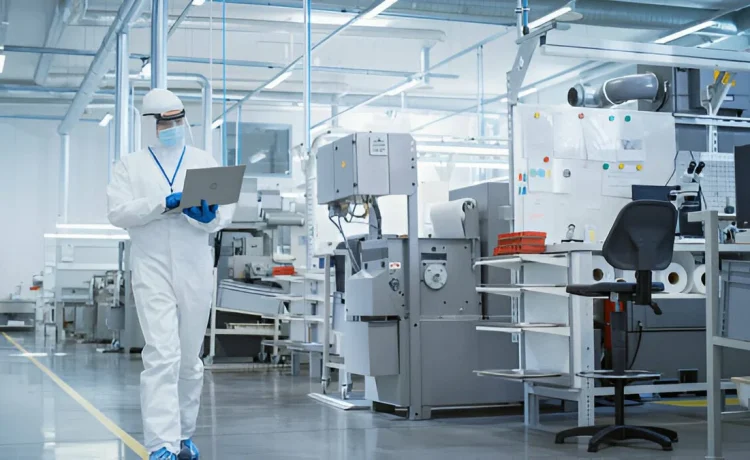
Clean room assembly in ISO Class 7 or Class 8 environments protects devices from particulate contamination during final assembly and packaging stages. These controlled environments operate under strict gowning protocols, airlock access, and continuous environmental monitoring through automated systems.
Inspection and Metrology
In-house metrology laboratories equip the manufacturer to verify dimensional accuracy, surface roughness, and material properties at each production stage. Coordinate measuring machines capture three-dimensional geometry data. Optical comparators and vision systems inspect surface features at magnifications sufficient to detect defects invisible to the unaided eye. Hardness testers confirm that heat treatment processes deliver the specified mechanical properties throughout the component cross-section.
Dr Tan Chorh Chuan, former President of the National University of Singapore and Chief Health Scientist at the Ministry of Health, stated in a 2023 address to the Singapore Medical Device Forum: “Manufacturers who invest in metrology infrastructure and digital traceability systems demonstrate a commitment to quality that regulators and procurement officers recognise as a differentiator in competitive global tenders.”
Material Selection and Biocompatibility
Choosing the Right Alloy or Polymer
Material selection for medical devices follows ISO 10993 biocompatibility testing requirements. Materials that contact tissue, blood, or bodily fluids must undergo cytotoxicity, sensitisation, and irritation testing before use in production. The medical device manufacturer documents material certificates, lot traceability, and test results for every incoming shipment.
Common materials in medical device production include:
- 316L stainless steel for surgical instruments and reusable devices requiring corrosion resistance
- Titanium Grade 5 (Ti-6Al-4V) for orthopaedic implants demanding high strength-to-weight ratio
- PEEK for spinal fusion cages and other load-bearing polymer applications
- Cobalt-chrome for dental prosthetics and joint replacement components
- Medical-grade silicone for seals, gaskets, and flexible tubing assemblies
Each material brings specific processing requirements. The manufacturer validates moulding, machining, and finishing parameters for every material-device combination.
Traceability and Post-Market Obligations
Lot-Level Documentation
Global regulatory frameworks require that every finished device traces back to its raw material lots, process parameters, equipment used, and operators involved. Electronic batch records capture this information in real time, creating an auditable chain of custody from incoming material receipt through final packaging and shipment. This traceability supports recall investigations, complaint analysis, and post-market surveillance reporting mandated by regulators in the US, EU, and Asia-Pacific region.
Supply Chain and Geographic Advantage
Singapore’s position as a global medical technology hub provides manufacturers with access to skilled labour, research institutions, and efficient logistics infrastructure. The country exported over 12 billion Singapore dollars in medical devices in 2023, reflecting the depth of its manufacturing ecosystem. Proximity to raw material suppliers across the Asia-Pacific region reduces lead times. Established air and sea freight routes connect Singapore to distribution centres in North America, Europe, and the Middle East within predictable transit windows.
Partnering for Global Market Access
Device companies seeking a medical device production organisation that meets international certification requirements benefit from manufacturers with multi-jurisdictional regulatory experience, validated processes, and in-house metrology. This combination positions the medical device manufacturer to deliver products that satisfy the quality expectations of regulators, clinicians, and patients across the world.