
So you’re staring at your screen, coffee in hand, wondering how to piece together a view of the world’s financial chaos without losing your mind. Let’s be real: there’s a sprawling mess of currencies, commodities, and indices out there, and every day brings a new twist. I’ve been there, trying to catch every shift from the Middle East to Wall Street, and what finally clicked was finding a solid Forex platform that doesn’t just show you numbers but makes sense of them. It’s not about some sterile dashboard, it’s about a space where you can actually feel the pulse of global markets without getting bogged down in jargon. Think of it like a coffee shop that serves up economic news with a side of raw data—you come for the caffeine, you stay for the clarity.
When you’re bouncing between the Saudi riyal and the Japanese yen, you need a Forex platform that feels less like a math exam and more like a chat with a friend who knows their stuff. The one I’ve been messing with, from a site I stumbled upon during my research, lets you jump into global markets with this weird ease—like swapping channels on a TV where every show is about money moving around. It’s not just about clicking “buy” or “sell”, it’s about watching how a rate in Cairo ties into a stock in Sydney. I remember the first time I used it to track the euro against the dollar while also eyeing gold prices from South Africa—it felt like I had a backstage pass to the world’s economy. And honestly, that’s what a good platform should do: make you forget you’re even using a Forex platform because you’re too busy seeing how these pieces fit together.
Now, let’s talk about the messy, beautiful chaos that is global markets. Imagine you’re at a bazaar where every stall screams a different story—oil from one corner, tech stocks from another, and some random currency pair in the middle. A decent Forex platform (In Arabic, it is called “منصة فوركس“) doesn’t just dump this all in your lap, it helps you sort through the noise. I’ve spent hours fiddling with charts on the one from markets.com, and I swear, the way it handles global markets is like having a translator for financial gibberish. You start noticing patterns—like how a move in the Indian rupee might echo through emerging markets, or how a Fed announcement ripples into every major currency. It’s addictive, sure, but also grounding because you realize that these global markets aren’t just numbers—they’re real economies clashing and cooperating in real time.
Here’s the thing: using a Forex platform to track global markets isn’t about being a pro trader. It’s about curiosity. I’m no hedge fund manager, I’m just a guy who likes to know why his beer got more expensive last month. When I pulled up the platform, I didn’t dive into leverage or margin nonsense immediately. I just clicked around, exploring how the British pound reacted to some news about Brexit leftovers, and then watched how it affected the FTSE index. That’s the beauty—you don’t need a PhD to see that global markets are all tangled up. The platform shows you the map, and you just follow the trails. Plus, there’s something satisfying about checking it before bed and seeing how Asian markets are waking up while you’re yawning.
Let’s get specific: the Forex platform I keep mentioning has this tab for “market overview” that sprawls across the screen like a spread of newspapers. I found myself staring at it for twenty minutes one night, just scrolling through names like AUD/NZD and DAX30, trying to connect the dots. It made me realize that global markets aren’t a monolith, they’re a mosaic of local stories. The Mexican peso had a weird day because of oil prices, and the Swiss franc was chilling as usual. That’s the kind of detail that sticks with you when you’re writing about it—you can’t fake that texture with generic data. So if you’re doing a piece on international finance, ditch the textbook and hang out on a Forex platform for a bit. Let it be your weird window into how the planet spins.
But here’s where it gets fun: you can actually trade on these global markets (In Arabic, it is called “الاسواق العالمية“) if you want, but I’d argue the real thrill is just watching. The platform I used let me set up alerts for big moves, so I got a ping when the dollar index hit a new high. It felt like getting a text from a friend saying “Hey, check this out,” and then you’re sucked into how that shift impacts everything from Brazilian real to Korean won. And because it’s a Forex platform built for this, you’re not fighting clunky interfaces—you’re just swimming in current. I once spent an entire Saturday tracking how global markets responded to a central bank statement in China, and by Sunday I felt like I’d lived a week of economic history. That’s the kind of engagement that makes you want to write a thousand words about it.
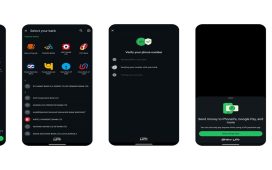
Oh, and don’t let the tech scare you. I’ve seen platforms that look like NASA control rooms, but this one kept it simple—almost like a friendly app on your phone. You can zoom into a chart, drag it around, and suddenly global markets feel like a puzzle you can solve. I tried explaining it to my colleague over coffee, and she laughed because I was using hand gestures to describe how the eurozone debt moved. But that’s the thing—when a Forex platform clicks, you stop treating it as a tool and start treating it as a lens. It’s not about algorithms, it’s about stories. Every currency pair has a backstory, every index has a mood, and this platform helps you eavesdrop on them all.
Let’s wrap this ramble with a thought: if you’re writing about finance, you owe it to yourself to find a Forex platform that feels alive. The one from my earlier link? It’s not perfect—no platform is—but it gets the basics right. It shows you global markets without dumbing them down or overwhelming you with noise. And that balance is rare. So next time you’ve got a blank page and a deadline, open up that interface, pick a random currency, and see where it takes you. You might end up writing about how a monsoon in Indonesia nudged palm oil prices, which then tweaked the ringgit—and suddenly you’re not just a writer, you’re a detective in the grand mystery of global markets. And that’s a pretty cool place to be, even if you’re still holding that coffee cup.